Independent Power Infrastructure Ensuring Continuous Operation of Remote Telecom Towers in Desert Environments
In remote desert regions of Yulin, Shanxi Province, telecom base stations must operate continuously to maintain regional network coverage and communication stability. However, conventional grid-dependent power supply models face persistent challenges in desert environments, including limited grid access, extreme temperature variation, wind-driven sand exposure, and high maintenance complexity.
To address these constraints, a customized 11 kW solar generation and 90 kWh energy storage system was deployed in late 2025, establishing a fully independent and resilient power architecture designed specifically for off-grid telecom tower applications in northwestern China.
"An off-grid solar and energy storage system combining desert-adapted photovoltaic arrays, wide-temperature battery storage, and intelligent remote power management supports sustained round-the-clock operation of telecom base stations in Yulin under site-specific operating conditions by mitigating grid unavailability, wind-sand exposure, and extreme temperature risks while significantly reducing long-term maintenance dependency."
Engineering Takeaways — Decision-Critical Insights for Desert Telecom Power Systems
The following engineering takeaways summarize how this off-grid energy architecture addresses environmental constraints, operational continuity requirements, and lifecycle cost considerations in desert telecom deployments:
✅ Grid-independent power architecture eliminates reliance on unstable or unavailable utility infrastructure in remote desert zones
✅ Wind-sand-resistant photovoltaic design maintains generation performance under frequent dust and abrasion exposure
✅ Wide-temperature energy storage ensures stable discharge behavior during cold winters and large diurnal temperature swings
✅ Intelligent remote visibility reduces manual site visits across dispersed desert tower locations
✅ Autonomous power continuity supports uninterrupted network coverage and service reliability
✅ Lifecycle optimization lowers long-term operational expenditure compared with grid extension or diesel backup models
SECTION 1 — Site-Specific Challenges for Telecom Base Stations in Yulin
Telecom base stations in Yulin are commonly deployed across sparsely populated desert and semi-arid zones characterized by long distances from urban infrastructure and harsh environmental exposure.
Key site-specific challenges include:✅ Limited or absent grid access across remote tower locations
✅ Strong seasonal winds and sandstorms causing surface abrasion and component degradation
✅ Large temperature differentials between day and night affecting battery performance
✅ Long travel distances for inspection and emergency maintenance
✅ High cost and logistical burden associated with grid extension or fuel-based backup power
SECTION 2 — Power Architecture & System Topology for Desert Telecom Applications
High-Capacity Solar Generation for Desert Conditions
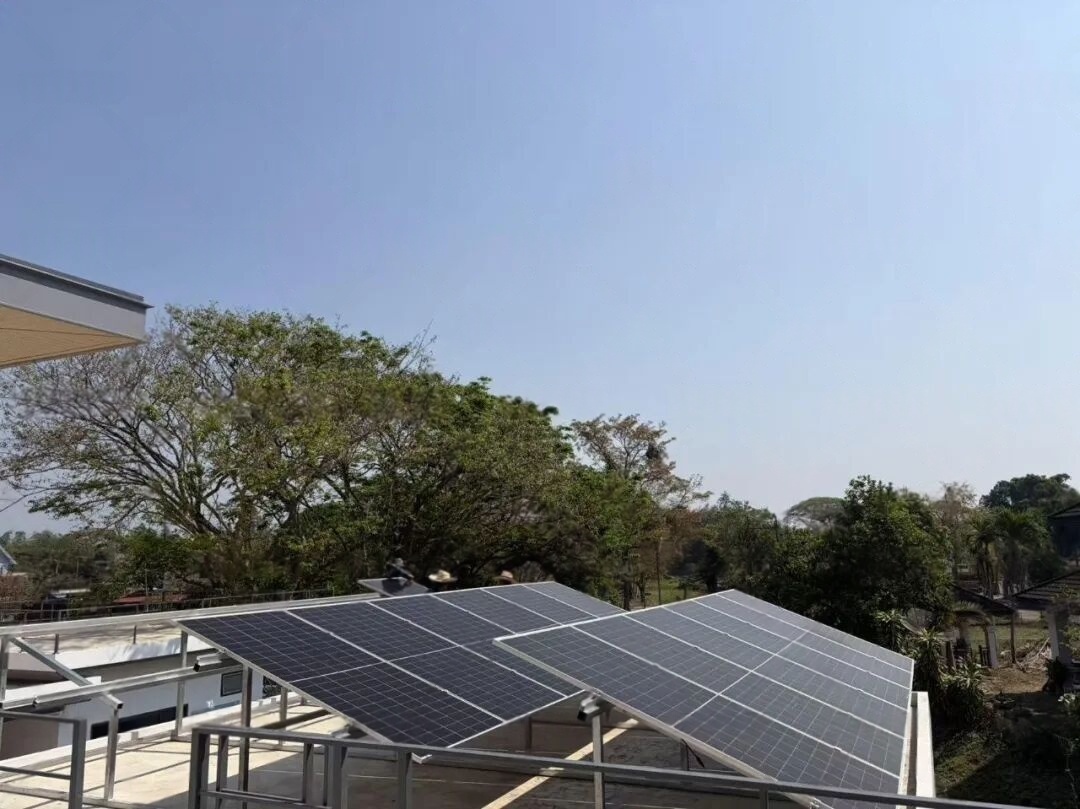
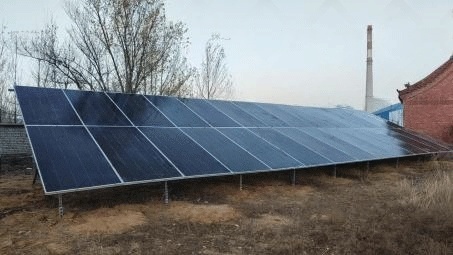
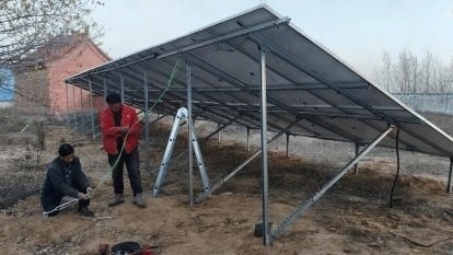
The system adopts an 11 kW photovoltaic array arranged in modular string configurations to match the high and continuous power demand of telecom base station equipment.
Key design considerations include:
✅ Anti-abrasion surface treatments to mitigate wind-blown sand erosion
✅ Low-temperature-tolerant photovoltaic materials for winter operation
✅ Optimized tilt and spacing to balance dust shedding and generation efficiency
✅ Structural reinforcement to withstand sustained wind loads
Wide-Temperature Energy Storage & System Protection
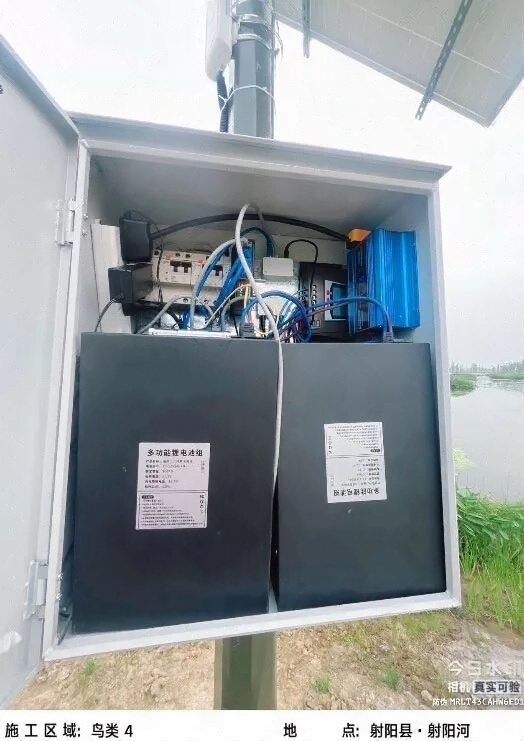
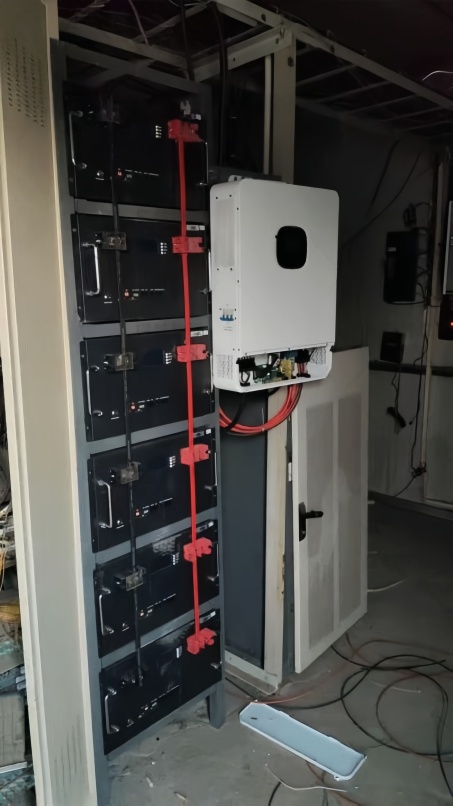
A 90 kWh energy storage subsystem provides extended autonomy during low-irradiance periods and night-time operation.
Engineering features include:✅ Battery cells designed for wide operating temperature ranges
✅ Thermal management strategies supporting cold-weather discharge stability
✅ Sealed enclosures limiting dust ingress and environmental contamination
✅ Integrated protection logic preventing deep discharge and overload conditions
Intelligent Power Management & Remote Visibility
A telecom-grade intelligent controller coordinates generation, storage, and load demand.
Functional capabilities include:✅ Real-time monitoring of photovoltaic output and battery state
✅ Load-aware energy dispatch to prioritize critical telecom equipment
✅ Remote fault alerts enabling proactive maintenance planning
✅ Reduced dependence on frequent on-site inspections
SECTION 3 — Deployment, Operations & Maintenance Efficiency
Desert-Adapted Installation Strategy
The system is deployed without grid extension or auxiliary fuel infrastructure, minimizing civil works and environmental disturbance.
Key deployment benefits:✅ No utility grid trenching across desert terrain
✅ Simplified installation timeline
✅ Reduced exposure to grid outage risks
Remote Operations & Maintenance Optimization
Remote monitoring significantly alters the maintenance model for desert telecom towers.
Operational advantages include:✅ Reduced inspection frequency across long-distance sites
✅ Faster response to abnormal power conditions
✅ Lower transportation and labor overhead
SECTION 4 — Measured Outcomes & Field Validation (Yulin, 2025)
KPI
| Observed Performance
|
System availability
| Continuous operation under normal operating conditions
|
Power supply continuity
| Stable support for telecom load profiles
|
Environmental resilience
| No abnormal degradation observed within the monitored operating period under wind-sand exposure
|
Maintenance frequency
| Substantially reduced compared with grid-dependent sites
|
(All results reflect field operation under site-specific environmental conditions.)
Deep Search Intent Expansion — Engineering & Procurement FAQ
Base Station Reliability & Power Continuity
How can an off-grid power system keep a telecom base station running continuously in remote desert areas like Yulin?
A: Continuous operation depends on correct sizing across three layers: solar generation capacity aligned to seasonal irradiation, energy storage sized for night-time and low-irradiance autonomy, and controller logic that prioritizes critical telecom loads. In Yulin’s desert climate, design must also consider wind-sand exposure and low-temperature performance to prevent capacity drops during cold snaps and to maintain stable discharge behavior during large day–night temperature swings.
What autonomy window should be considered for a desert telecom tower when sunlight is reduced by dust or winter conditions?
A: The autonomy window should be defined by the site’s worst-case operating period rather than average sunshine. For desert tower deployments, engineering teams typically model reduced PV output due to dust accumulation and seasonal lower irradiance, then size storage to bridge night operation plus an additional buffer for consecutive low-generation days. The correct number is project-specific and should be confirmed via load profiling and seasonal solar resource assumptions for the Yulin region.
Environmental Durability in Wind–Sand and Temperature Variation
What design features reduce performance loss from wind-driven sand and dust in Yulin’s desert base station sites?
A: Performance retention is improved through a combination of abrasion-resistant PV surface treatments, mechanical reinforcement for sustained wind loads, and enclosure sealing strategies that reduce dust ingress. Operationally, array tilt and layout should support natural dust shedding and allow for predictable cleaning intervals based on site accessibility. These measures help stabilize generation behavior over time without relying on frequent manual maintenance.
How does wide-temperature energy storage improve stability during cold winters and large day–night temperature swings?
A: Wide-temperature battery cells and thermal management strategies reduce the risk of winter capacity degradation and unstable discharge at low temperatures. In desert environments like Yulin, where temperatures can shift significantly within a day, battery protection logic and enclosure design become part of the reliability system: they help maintain a stable operating envelope, reduce stress on cells, and support consistent power delivery to telecom loads.
Remote Operations, Monitoring, and Maintenance Strategy
What should remote monitoring include for off-grid telecom power systems to reduce site visits?
A: Remote monitoring should cover PV output, battery state of charge, charge/discharge current, controller events, and key environmental indicators when available. Alerts should be event-driven—such as abnormal voltage, temperature out-of-range, or sustained low generation—so maintenance actions are triggered by operating conditions rather than calendar-based inspections. This approach is particularly valuable for Yulin’s dispersed desert sites where travel time and access constraints raise operational costs.
When should a hybrid or auxiliary power strategy be considered for telecom towers in desert regions?
A: Hybrid strategies are considered when load demand is unusually high, when the site experiences extended low-irradiance periods, or when operational criticality requires an additional redundancy layer beyond solar-plus-storage. In practice, the decision is driven by risk tolerance (downtime cost), autonomy requirements, and the feasibility of maintenance access. For some mission-critical towers, an auxiliary source can be integrated as a contingency rather than a primary supply.
Procurement, Sizing, and Deployment Readiness
What information should a buyer or system integrator prepare before requesting a configuration for a Yulin telecom base station project?
A: To produce an engineering-accurate configuration, provide the base station load profile (average and peak power), required uptime and autonomy expectations, site coordinates or solar resource assumptions, mounting constraints, seasonal temperature range, wind-sand exposure level, and available communication method for remote telemetry. With these inputs, the power architecture can be sized to match real operating conditions while avoiding oversizing that increases cost without improving reliability.
Engineering Decision Rationale & System Value
This deployment demonstrates how desert-adapted off-grid energy systems can redefine telecom power strategies in remote regions:
✅ Independent energy supply improves network resilience
✅ Reduced environmental exposure extends equipment service life
✅ Lower long-term operating costs compared with grid extension or diesel backup
✅ Flexible scalability for future tower expansion or load growth
Related Smart-Infrastructure Energy Solutions
Highway & Expressway Monitoring Power Systems
Off-grid energy solutions supporting continuous operation of traffic surveillance, road condition monitoring, and roadside sensing equipment across highways and expressways with limited grid access.
👉 Explore solar power solutions for highway monitoring infrastructure.
Smart Agriculture & Remote Farming Energy Systems
Autonomous power architectures enabling reliable operation of agricultural sensors, cameras, and IoT devices across farms, greenhouses, and remote cultivation zones.
👉 Learn more about solar power systems for smart agriculture applications.
Hydrology & Water Conservancy Monitoring Power Infrastructure
Independent energy systems supporting water level, flow rate, and environmental data acquisition for rivers, reservoirs, and flood control facilities.
👉 View solar power solutions for hydrological and water conservancy monitoring.
Oil & Gas Pipeline Monitoring Power Systems
Resilient off-grid energy solutions ensuring uninterrupted monitoring of pipeline safety, leakage detection, and corridor surveillance across remote oil and gas transmission routes.
👉 Discover solar power systems for pipeline monitoring applications.
Custom-Built Off-Grid Power Systems for Specialized Environments
Tailored energy architectures designed for unique operational, environmental, and regulatory requirements across complex infrastructure projects.
👉 See custom off-grid power solutions.
Engineering & Procurement Contact — Off-Grid Telecom & Infrastructure Power Projects
This section serves as the technical and procurement entry point for organizations planning telecom power deployments under harsh environmental conditions.
Who This Is For✅ Telecom operators managing remote base stations
✅ System integrators delivering off-grid communication infrastructure
✅ Infrastructure developers operating in desert and semi-arid regions
What Support Is Provided✅ Site feasibility assessment and load profiling
✅ System architecture and capacity planning
✅ Desert-adapted reliability and lifecycle optimization
✅ Deployment guidance and long-term operational planning
Engineering & Procurement ContactEmail:tony@kongfar.com
Website:https://www.kongfar.comAll inquiries are reviewed by engineering specialists to ensure technical feasibility, environmental compatibility, and long-term operational reliability before procurement decisions are finalized.


 English
  Deutsch