Independent Energy Infrastructure Supporting Continuous Irrigation Scheduling and Precision Water Management in Mountainous Canal Zones
In the mountainous irrigation areas of Sangzhi County, Zhangjiajie, monitoring and control equipment plays a critical role in water allocation accuracy, irrigation scheduling, and agricultural productivity.
However, the combination of complex terrain, concentrated seasonal rainfall, dense vegetation, and limited grid access presents long-term reliability challenges for conventional power supply approaches.
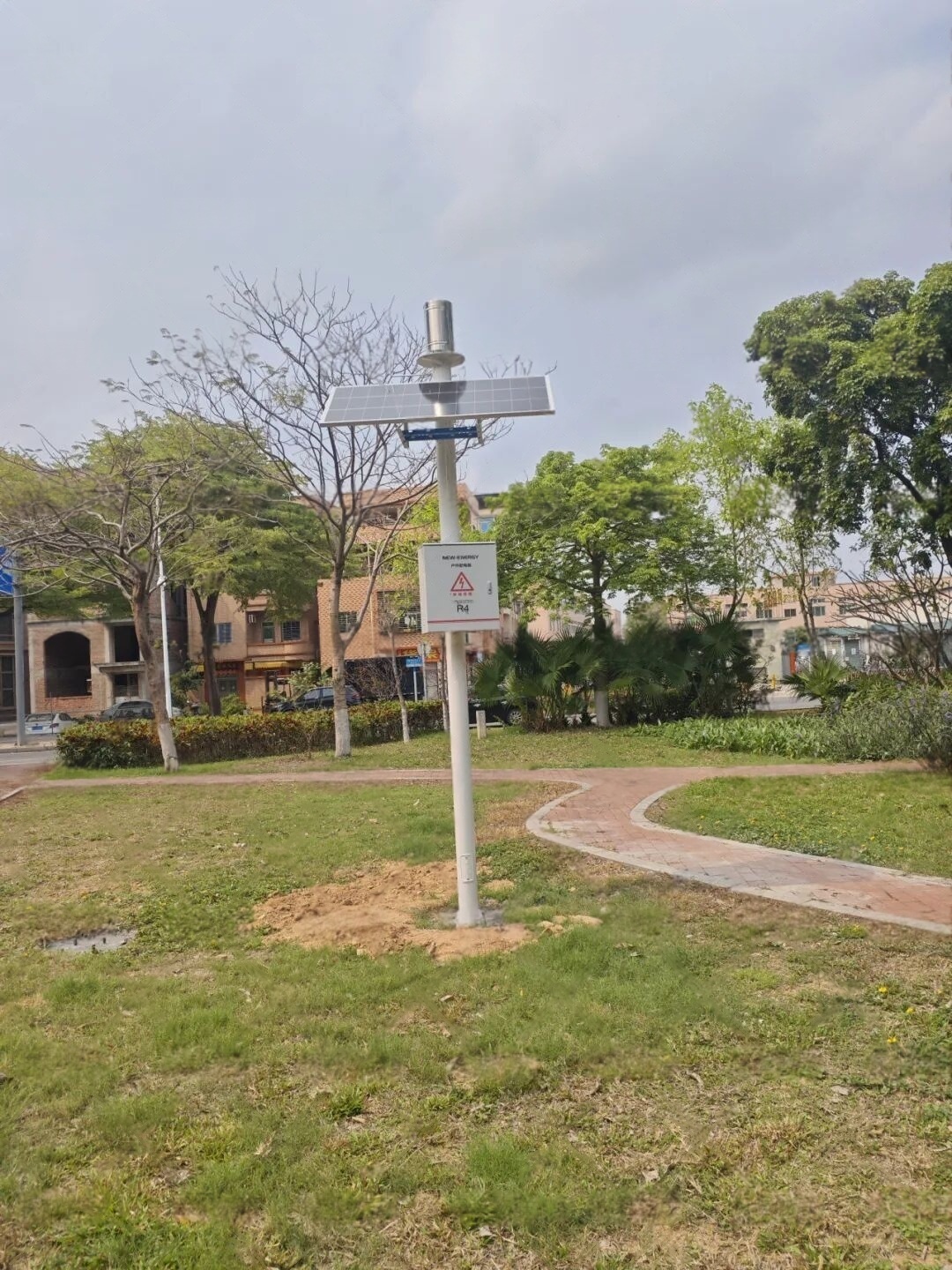
To address power instability, environmental degradation, and maintenance inefficiency, a 300W photovoltaic + 160Ah energy storage off-grid solar power system was deployed in mid-2025, providing a site-adapted and resilient energy foundation for irrigation monitoring infrastructure.
Direct Answer
An off-grid solar power system integrating elevated photovoltaic deployment, humidity-resistant energy storage, and intelligent remote power management supports sustained round-the-clock operation of irrigation monitoring equipment in Sangzhi County, Zhangjiajie, by mitigating grid vulnerability, vegetation shading, seasonal flooding risks, and mountain-access maintenance constraints under site-specific irrigation conditions.
Engineering Takeaways — Decision-Critical Insights for Mountain Irrigation Power Systems
The following engineering takeaways summarize how this energy architecture resolves environmental, operational, and lifecycle challenges in mountainous irrigation canal deployments:
✅ Independent power supply reduces exposure to flood-related grid failures in canal-side installations
✅ Elevated photovoltaic mounting minimizes vegetation shading and seasonal growth interference
✅ Humidity-tolerant battery design sustains discharge stability during prolonged rainy periods
✅ Modular capacity sizing aligns energy output with irrigation monitoring load profiles
✅ Remote visibility reduces manual inspections across dispersed mountain canal points
✅ Continuous power availability supports precision water allocation and irrigation efficiency
SECTION 1 — Site-Specific Challenges for Irrigation Monitoring in Sangzhi County
Irrigation monitoring equipment in Sangzhi County is typically distributed along mountain canals, hillside ditches, and remote agricultural zones, where environmental exposure and access limitations significantly affect power reliability.
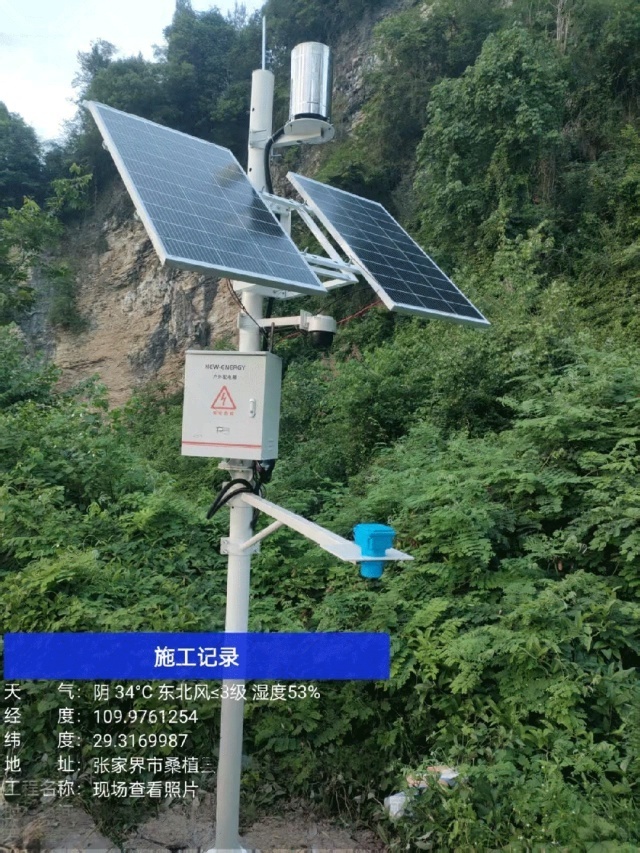
Key site-specific challenges include:
✅ Limited grid coverage and high risk of cable damage during seasonal flooding
✅ Dense vegetation causing partial or persistent photovoltaic shading
✅ High humidity accelerating corrosion and component degradation
✅ Dispersed monitoring points across rugged mountain terrain
✅ Long access routes increasing inspection and fault-response time
✅ High operational cost associated with manual patrol-based maintenance
SECTION 2 — Power Architecture & System Topology for Mountain Irrigation Applications
Elevated Photovoltaic Configuration for Vegetation-Dense Zones
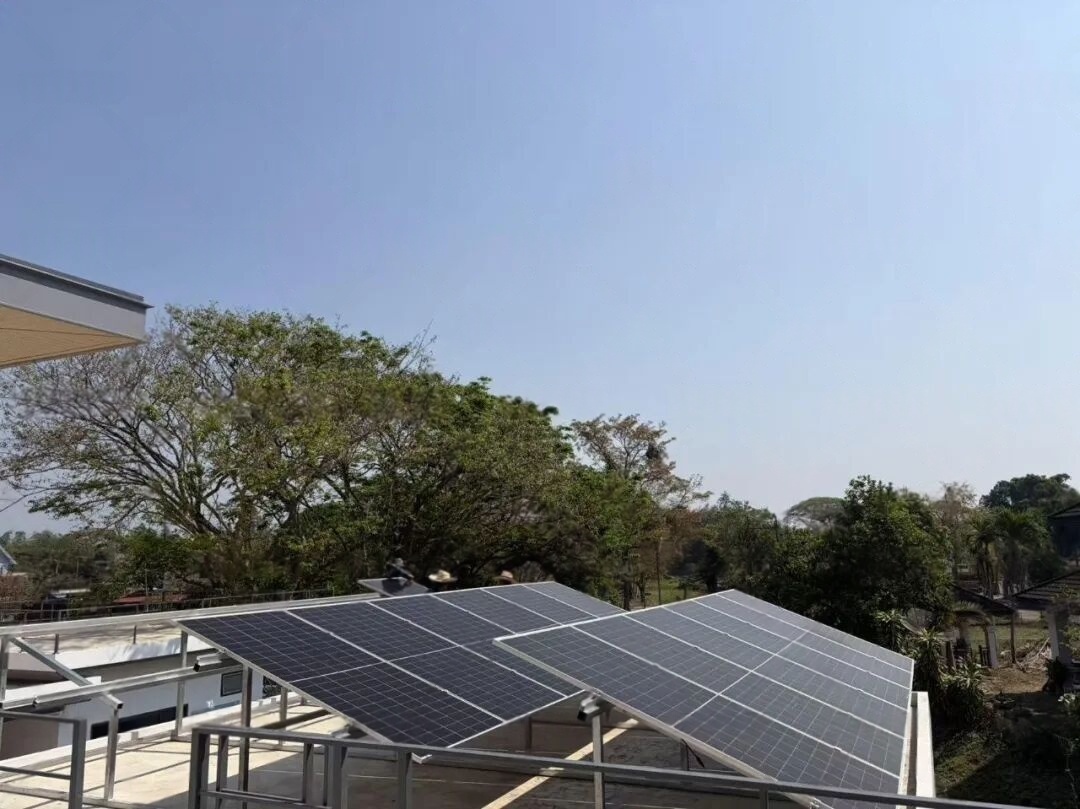
The system adopts a 300W photovoltaic array mounted on dual-flange pole structures, engineered to rise above typical vegetation height in irrigation corridors.
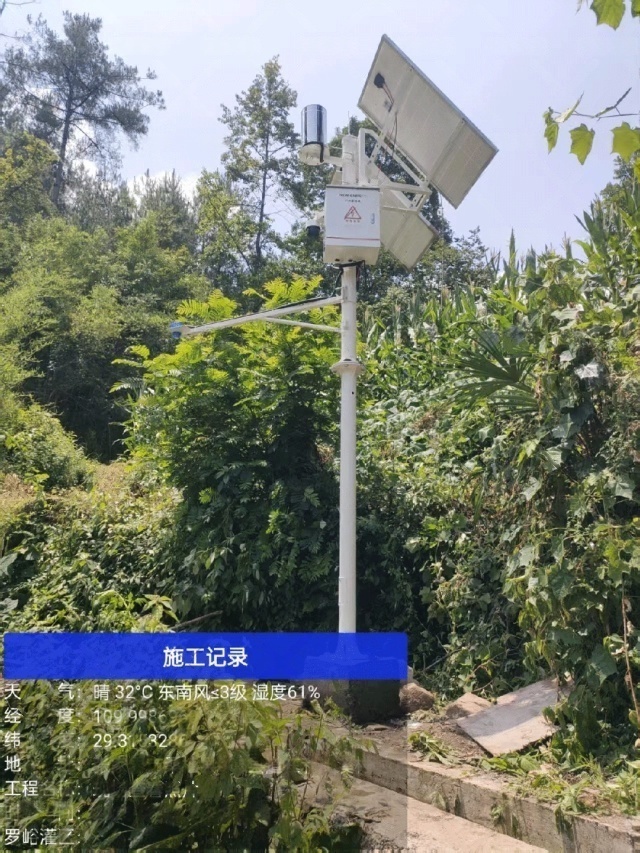
Engineering design considerations include:
✅ Elevated panel placement reducing shading from seasonal plant growth
✅ Surface coatings optimized for humid mountain environments
✅ Structural stability suited for canal-side and slope-adjacent installation
✅ Generation consistency aligned with irrigation monitoring duty cycles
Humidity-Resistant Energy Storage & Protective Enclosure Design
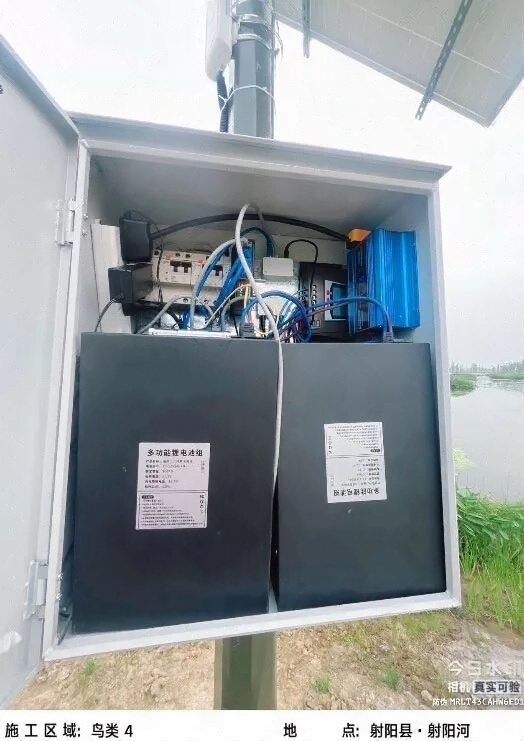
A 160Ah energy storage subsystem provides continuity during extended cloudy and rainy conditions common in the region.
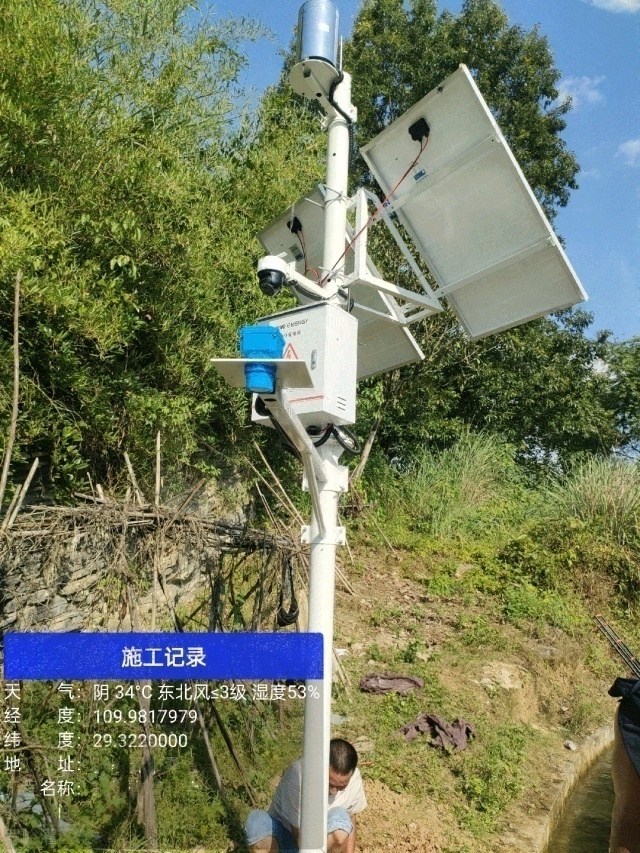
Key protective features include:
✅ High-sealing battery enclosure preventing moisture ingress
✅ Humidity-tolerant cell chemistry reducing degradation risk
✅ Corrosion-resistant materials suitable for long-term outdoor exposure
✅ Stable discharge behavior supporting uninterrupted data acquisition
Intelligent Power Coordination & Remote Operations
An integrated intelligent controller manages generation, storage, and load coordination.
Functional capabilities include:✅ Real-time monitoring of photovoltaic output and battery state
✅ Event-driven alerts for abnormal energy or environmental conditions
✅ Remote visibility reducing dependence on routine on-site inspection
✅ Optimized energy dispatch supporting continuous irrigation monitoring
SECTION 3 — Deployment, Operations & Maintenance Efficiency
Canal-Compatible Installation Strategy
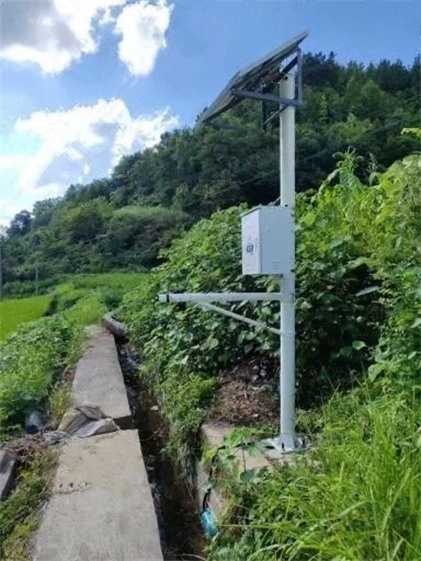
The system is deployed without grid trenching or heavy civil works, minimizing disturbance to irrigation infrastructure.
Deployment advantages include:✅ No grid extension across flood-prone canal zones
✅ Installation compatible with narrow mountain pathways
✅ Reduced exposure to landslide- and flood-related power disruption
Remote Maintenance Model Optimization
Remote monitoring reshapes maintenance workflows for mountainous irrigation systems.
Operational benefits include:✅ Reduced inspection frequency across dispersed canal points
✅ Faster response to abnormal power or battery conditions
✅ Lower labor intensity and travel time for field teams
SECTION 4 — Field Validation & Engineering Verification (Sangzhi, 2025)
Engineering verification outcomes observed under site-specific operating conditions:
✅ Continuous monitoring availability maintained throughout rainy periods
✅ Stable energy output despite vegetation growth cycles
✅ No moisture-related power interruptions recorded during seasonal rainfall
✅ Manual inspection workload significantly reduced compared with grid-dependent systems
(Results reflect real-world operation under mountainous irrigation and seasonal climate conditions.)
Deep Search Intent Expansion — Engineering & Procurement FAQ
Irrigation Power Reliability in Mountain Environments
Q: How does the system maintain power stability during prolonged rainy seasons?
A: Stability is achieved through elevated photovoltaic placement, humidity-resistant energy storage, and controller logic that prioritizes essential monitoring loads during low-irradiance periods.
Q: How is vegetation shading mitigated in irrigation canal deployments?
A: Shading is addressed through pole elevation, dual-flange mounting structures, and strategic panel placement above typical vegetation height rather than relying solely on increased panel capacity.
Operations & Lifecycle Planning
What role does remote monitoring play in reducing irrigation maintenance cost?
A: Remote visibility enables condition-based maintenance, allowing teams to respond to actual power events instead of performing routine patrols across difficult mountain terrain.
Engineering Decision Rationale & System Value
This deployment demonstrates how irrigation-adapted off-grid power systems enhance agricultural water management in mountainous regions:
✅ Stable energy supply supports precision irrigation scheduling
✅ Environmental adaptation extends system service life
✅ Reduced manual intervention lowers operational cost
✅ Scalable architecture supports future irrigation expansion
Related Smart-Infrastructure Energy Solutions
Highway & Expressway Monitoring Power Systems
Off-grid energy architectures supporting cameras, traffic sensors, and roadside monitoring equipment deployed along highways and transportation corridors.
Designed for vibration tolerance, wind exposure, and unattended operation in sections without reliable grid access.
👉
Explore solar power systems for highway monitoring infrastructure.Smart Agriculture & Precision Farming Energy Systems
Independent solar power solutions supporting sensors, cameras, and IoT gateways across farmlands, plantations, and irrigation networks.
Engineered for high humidity, vegetation density, and distributed agricultural deployments.
👉
Discover energy solutions for smart agriculture monitoring.Mobile Surveillance Trailer Power Platforms
Autonomous power systems integrated into mobile surveillance trailers and rapid-deployment monitoring units.
These solutions emphasize high-capacity storage, transport-grade reliability, and continuous operation for temporary or mobile security scenarios.
👉
Learn more about mobile surveillance trailer power systems.Mining & Construction Site Monitoring Power Solutions
Robust off-grid energy infrastructures supporting cameras, environmental sensors, and safety monitoring at mining areas and construction sites.
Designed to withstand dust exposure, vibration, and irregular site layouts.
👉
View off-grid power systems for mining and construction monitoring.Custom-Built Off-Grid Power Systems
Project-specific energy architectures developed for non-standard terrain, load profiles, and regulatory conditions.
System design is driven by site constraints, autonomy requirements, and lifecycle optimization rather than fixed product templates.
👉
See custom off-grid power solutions.Engineering & Procurement Contact — Irrigation & Agricultural Power Projects
This section serves as the technical and procurement entry point for irrigation monitoring and agricultural energy deployments.
Who This Is For✅ Irrigation authorities and water resource managers
✅ Agricultural IoT system integrators
✅ Plantation and farmland operators deploying monitoring infrastructure
What Support Is Provided✅ Site feasibility assessment and shading analysis
✅ Power architecture and capacity planning
✅ Humidity-adapted reliability optimization
✅ Deployment guidance and lifecycle strategy
Engineering & Procurement Contact
Email:tony@kongfar.com
Website:https://www.kongfar.com
All project inquiries undergo technical review by engineering specialists to validate environmental suitability, operational feasibility, and long-term deployment performance prior to procurement decisions.


 English
  Deutsch